The Lion Sleeps Tonight

I’ve always like the song “The Lion Sleeps Tonight” and particularly the original recording by The Tokens. It was one of my first MP3 purchases. Since I have Wikipedia on my iPod, sometimes I will look up a song and find out about it (most songs don’t have articles, but some big ones do, “Gimme Shelter” by the Rolling Stones is one). Anyway, Wikipedia has a great article about “The Lion Sleeps Tonight”, tracing the roots back to a South African Zulu who recorded a song called “Mbube” in 1939 (“mbube” is the Zulu word for lion). It had some local success and found its way around to different people interested in exotic folk music. The American folk singer Pete Seeger, of The Weavers, got hold of a copy of Mbube on 78 and started playing it at shows. Seeger took some creative license in naming the song “Wimoweh” (spelling “mbube” phonetically, which is pronounced “em boo beh”) and making a big band version of it in 1951, though that was probably just for the recording since The Weavers were a folk group and wouldn’t usually have an orchestra. Then in 1961, RCA modified the song that Seeger had popularized by adding English lyrics. This became “The Lion Sleeps Tonight” performed by The Tokens. It became even more popular at that point. Then it was reintroduced as part of The Lion King in 1994. An article in Rolling Stone in 2000 traced the history of the song and then a documentary was made in 2004. This brought attention to some of the lapses in paying the Zulu guy who originally made the song (and had never made much money off of it since the record company kept all the royalties). Seeger said he thought it was a traditional folk song and therefore no royalties would be due.

Anyway, the neat thing about having all the history of a familiar song is that you can go on You Tube and hear the different versions:

Makita Battery Pack

One of the early and best tools I bought when I got my house was a Makita cordless drill. I bought it as part of a combo pack that also included a cordless circular saw with a 3 and 5/8″ blade. That blade is too small to cut a 2×4, but is enough to cut through plywood, siding, and 1×4’s. I used it to cut siding for the garage and the back of my house. I use it sometimes when I have a bunch of limbs that I am trying to cut down to 4′ lengths, working very well on the tangle of limbs that is privet. But the batteries are really old now and don’t hold a charge for more than a few minutes. New batteries are very expensive: at least $50 for one. The nice thing is they have NiMH batteries with more capacity than the NiCad one I have, but those are about $70. This is kind of similar to my problem with VersaPak tools that I bought at about the same time, actually. I wound up paying extra for NiMH.
Continue reading “Makita Battery Pack”

Yellowstone Trip

Last weekend I got back from my trip out West to go to Yellowstone and Grand Teton National Parks. I booked a room at Yellowstone last Fall and they were still mostly full already. I had a couple of days in Salt Lake City, so I got to see some sights around there as well, including the botanical gardens (which I saw last time, but during a different season), Golden Spike National Historic Site, and the Bonneville Salt Flats, one of the coolest places in the world.

After that it was off to Wyoming for the Grand Tetons and Yellowstone, but we had to pass through Idaho, and also went up to the northern entrance, which is in Montana. Plus after Bonneville, we had continued a few miles further into Nevada, so I got to add 4 new states to my list of states I’ve visited.

I worked this week on a website for the trip and just got it ready (subject to change). It uses picture captions based on Wikipedia’s stylesheet. I had used a stylesheet with my movie reviews, and thought I would try one for a trip site this time.

Ted’s Yellowstone Web Page

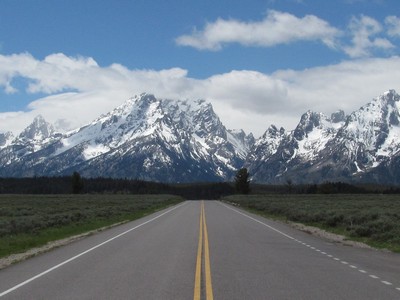
Some sample pictures (bigger versions are available by clicking pictures on the website, but not here):

7-546_teton_road

Continue reading “Yellowstone Trip”

Dividend Reinvestment Plan

I have heard about dividend reinvestment plans (or DRIPs) for a long time. By buying as little as one share of stock and reinvesting the dividends, you can end up with a whole lot of shares of stock. Sort of. Actually I almost always reinvest my dividends and distributions from mutual funds, which is where most of my money is invested, but I have never bothered doing that with stocks. I think the main reason is that I plan on selling the stocks as soon as they go up (typically 20%) rather than hold on to them for a long time. But sometimes they don’t go up very fast and I end up holding onto them for a lot longer. One of those that I have had for quite a while is Coca Cola. I think I bought them after they had years of great increases, and Coke did nothing much for the next few years. It always had a nice quarterly dividend, but for the 30 shares I owned, it was about $7 a quarter. The nice thing about Coke stock is they didn’t seem to be affected as much by big market downturns, dropping about 20% during the mortgage meltdown compared to 50% or more for most stocks. Last year the stock split and I was well over my 20% gain. Meanwhile the dividend had gone up and that same batch of shares is now giving me $17 per quarter, a 2.6% yield, more than I get with bonds.
Continue reading “Dividend Reinvestment Plan”

Lotto Fever!

Today’s projection for the PowerBall jackpot jumped to $600 million. Because the odds are so ridiculously bad, all of the money that people who lost in previous weeks could eventually store up and make playing the lottery a good investment. Like if you could pay $1 on a dice roll and win $10, that would be totally worth it (the 10 to 1 payoff is greater than the 6 to 1 odds of losing). So I looked up the odds of winning PowerBall: 175 million to 1. Even though it costs $2 to play, winning $600 million for an investment of $2 seems like it works pretty well. It’s a 300 million to 1 payoff and the odds are 175 million to 1.
Continue reading “Lotto Fever!”