Canon vs. Samsung

I got my new camera today. It was overcast, but the sun wouldn’t set for another hour and a half, so I went ahead and took a picture outside on the back porch. From about 20 feet away, I zoomed all the way in with both cameras aimed at the box the new camera came in. While the Samsung has a bigger and better photo sensor and a higher quality lens, the Canon has a much greater zoom at 10x instead of 2.5x. The Canon claims 14 megapixel resolution and the Samsung 20 megapixels, so maybe the sensor could make up a little for the disparity in zooming ability. Not really. I cropped out 400×300 portions of the pictures taken by both cameras and saved them as jpg files. Here’s the Samsung:

SAMSUNG CSC

and here is the Canon:

canon

It’s really too ugly a day to much more in comparison, plus the Samsung is kind of complicated, so I need to figure some stuff out. Both pictures have a good bit of noise which isn’t that surprising at full resolution. The picture I took was in smart mode, which is the automatic mode. I do have to manually zoom in by turning the ring on the lens, but it took care of the focus and exposure. Both cameras were sitting on a stool and took pictures on timer so there would be no shaking.

Here is the data from each picture, automatically selected by each camera:

Canon Samsung
f-stop: f/5.6 f/5.6
shutter: 1/13 sec 1/40 sec
ISO: 800 800

Better Camera

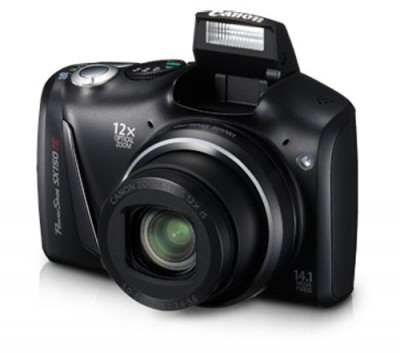
I had my old camera for a while. It was a Canon SX100IS. It had a really nice zoom lens (10x), took nice pictures (8 megapixels or MP), and had a lot of neat features. One of the features was a panorama assist mode where it would help you take panorama pictures by showing you the edge of the previous picture so that you could line things up using the screen to get enough overlap between pictures. When I lost that camera this year, I wanted to get something similar. Jeb had gotten one in that series as well, but it was maybe a SX130. When I went shopping there was a SX160 out, but the SX150 was cheaper, so I got it, surprised it was only about $115. It had a little more zoom power (12x) and took higher resolution photos (14 MP). It uses 2 AA batteries, meaning I can have plenty of backups available and they don’t require a special charger or overpriced replacements. I’ve had that camera for several months now and took it on my trip out west where I really put it to work.

However, the new camera isn’t quite the same, which maybe isn’t surprising since it was about half the price. It lost the panoramic stitch feature (which I missed out west, trying to do it a couple of times without assistance and not getting any usable results; one other trick is to make sure the exposure settings are locked so that all the pictures have the same exposure). Also I had a hard time getting the exposure to work out right and found I was needing to tweak it constantly, trying to get it just a little darker or a little lighter to get a good result. I still managed to get some good pictures. Also, conditions were challenging with overcast skies most of the time and a lot of pictures taken late in the day without a lot of light, which is a challenge for any camera. But one time I was taking a picture of a lake that looked pretty green to me and it came out brown. I knew I could do better than this.

canon_sx150is

Continue reading “Better Camera”

Hotlinking

Hotlinking is a practice where you insert an image on the web somewhere by using the address of an image that is on another server that doesn’t belong to you. Many forums ban hotlinking, but many others don’t care. If it is a product for sale I don’t feel like the person selling the product would care that much since it is helping to get word out about the product, but I still think it is wrong. To me it is better to copy the image and put it on my own server and then link to someone else’s and use their bandwidth, though I realize not everyone has a server. Even that is wrong. For the Flashlight Wiki, I always get permission to use someone’s picture, give them credit, and host it on the site. There are websites that let you host images for just this purpose like photobucket, but there are restrictions.

Going over the web use statistics for Flashlight Wiki, I was finding a huge number of referrals from an Indonesian website. I was getting over 4,000 hits from that page. Plus the page had a couple of other versions that were generating another 1,000 hits. But these weren’t real referrals, they were just hotlinking images stored on flashlightwiki.com. This page did at least have the Flashlight Wiki listed as a source and 25 people clicked on that link to see the original page.

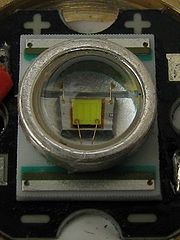
The page was actually a translation of another page with extensive hotlinking done on Budget Light Forum. That post generated another 2,000 hits and no actual referrals because the author didn’t include a link to the wiki. Here is one of the images that was used (hotlinked!):
Ultimately, I’m not being hurt that much. I get a certain allowance from my web host service for bandwidth and I only go up to about 10% of the maximum allowed. But the hotlinking represents more than half of the referrals from sites that are not search engines.

One way to combat hotlinking is to swap out the image being hotlinked with another one then the page using the image will see the new image. It might say “NO HOTLINKING” or “IMAGE REMOVED” or something like that. There are some great ideas out there if you look for hotlinking images. One time Jeb accidentally hotlinked an image for one of his websites and the indignant site owner swapped out an image of a hamburger, just to send a message. I thought that was pretty funny, so here is what the Indonesian page discussing LED’s (which hotlinks a bunch of images, including the one above) now looks like:
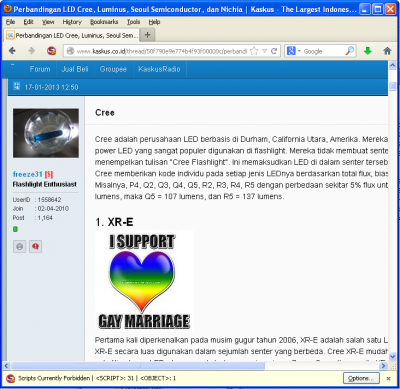
screencap

The only thing is that my wiki is using that picture as well, so I had to upload a copy of the correct picture to the wiki and then link my pages to the new image (interestingly, the wiki software won’t let you upload two images of the same thing, so I had to change the original image first and then upload the old image, so for a few minutes the wiki was showing the new image). None of the wiki pages link to the old image anymore. So it was kind of a pain, but a fun way to send a message.

New Transit System

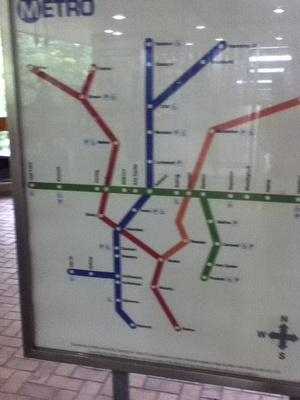
I have been riding MARTA every day for quite a while now, parking at the Avondale station and riding into work. But this week, something happened to the Avondale station. The “MARTA” signs now read “METRO” and our very simple transit map became more complicated with additional lines and stations I’ve never heard of. Yesterday signs went up over the escalators for the green and blue lines even though there is only one line that goes through Avondale (a blue line). Here is the system map posted in the station:

map

West East North South

Continue reading “New Transit System”

Saltair

As Susan and I were driving out to the Bonneville Salt Flats a few weeks ago, we skirted the southern end of the Great Salt Lake. It isn’t much to look at really, just a lake. As we drove I noticed an old building with onion domes on it between I-80 and the lake. It looked like maybe it was an arcade or something. Then today I was watching the ARTS channel on TV and they were starting a movie called Carnival of Souls (though they ended up only showing it for a few minutes, I guess for the organ music; I don’t understand the ARTS channel). I had never heard of it, but the on screen notes said it was a 1962 movie filmed in Salt Lake City at the abandoned Saltair pavilion. I looked the movie up on Wikipedia and it had a link to Saltair, Utah where I found out that the building I saw was actually Saltair III, built in 1981. Saltair II was the setting of the 1962 movie (which became a cult classic), but it burned in 1970, following in the footsteps of the original Saltair I, which was built in 1893 and burned in 1925. At one time it had the biggest dance floor in the country and was quite popular but fell on hard times. Saltair III, which is still there, is used sometimes for concerts and was built about a mile from the original location. All that is left of the original Saltairs are piles that the buildings sat on. One problem with a lakeside resort on the Great Salt Lake is that the extent of the lake varies quite a bit over time and Saltair III was sometimes flooded and sometimes a long way from the water. Wikipedia also points out that one of my favorite bands, The Pixies, wrote the song “Palace of the Brine” about shrimp that live in the lake and the “Palace” is Saltair. I had no idea about any of this as we drove out to Bonneville and I noticed a funky building with onion domes.