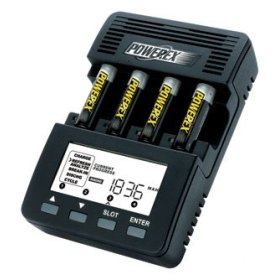
After doing research on flashlights, I thought it would be neat to get a solar battery charger. Then you could run the flashlights for free! I have links to some solar products on my iPod battery web page. I found a couple of posts on Candlepower Forums about solar chargers and the experts there seemed to wonder what the point is. A decent solar charger will cost nearly $100 which will buy a lot of batteries. If you are camping then you would have to carry the solar charger with you and then leave it in the sun while it charged batteries. Why not carry some extra batteries? Even the better ones will take all day to fully charge 4 AA batteries and that would require full sun and probably moving the solar panel to get the best exposure throughout the day. Will you have time for that?
It is still intriguing. Some of the solar chargers have an internal battery that the panel charges and then you plug your device (iPod, Palm, phone, or battery charger) into a USB jack on the charger (at night I guess) and get juice from the internal battery. That’s good because you don’t want to leave your batteries or your iPod in the sun all day.
One of the better ones may be a folding one made by Powerfilm. The key is to get plenty of area and this one folds out to get extra coverage, but can be folded up to about the size of a wallet. The advantage and problem is that it uses thin film solar cells which won’t crack like the glass ones, but are not as efficient either (so it needs more area). I couldn’t find a whole lot on user experience for these things. Most of the other ones I’ve seen have much less area but are using more efficient solar cells. Some of them are clearly junk and might require several days of sun just to charge a few AA batteries.
The only other use would be for a prolonged power outage, but even then I have a battery charger that can run off of the car lighter and I could probably charge batteries at work and bring them home. Now if the power grid fails for some reason, then it might be nice to have a solar charger, but if that is the case then I might have bigger worries than if my iPod or flashlight will work.
Continue reading “Solar Charger”