
When I had my deferred compensation plan at work (like a 401k, but technically a 457b), I would think of an investment mix I wanted and rebalance every quarter. I wanted some exposure to foreign stocks, so I might put 30% in that. Then I would want something in cash or bonds so I might put 20% in there. The rest would be US stocks, so I would 40% in large cap stocks and 10% in small cap stocks. That was a reasonable diversified portfolio. Then by rebalancing you make sure you stick with that mix, but I also like that if foreign stocks did really well, you would end up selling some of that at a high and distributing it to the others that didn’t perform as well, so it was kind of a way of doing market timing, which I was never able to do successfully otherwise. The fallacy of that was that investing 100% in stocks always seemed to do better over the long run than watering it down with bonds or even foreign stocks, which seem to generally underperform domestic stocks. I never liked bond mutual funds because rather than really getting nice safe fixed income, it seemed like you were actually betting on interest rates, which would fluctuate.
This past year I did a rollover where I put all of my deferred comp funds into a conventional IRA at Vanguard. Both accounts are funded with pre-tax salary and will have taxes when I withdraw the funds, so no taxes were due because of this transaction, but I will still pay taxes later.
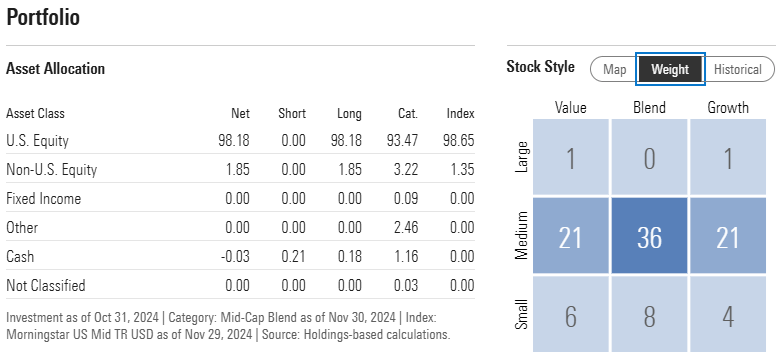
The neat thing about moving the funds to Vanguard, is that I stopped using my Deferred Comp spreadsheet and put everything into my Investment spreadsheet where I keep up with brokerage accounts (taxable), Roth IRA (not taxable), and IRA (tax deferred). I wanted to continue the asset allocation strategy I had been using with deferred comp, so I would set goals, generally very similar, at my brokerage, Roth, and IRA. Rather than wait for the quarter, I would just see when they got a little out of whack and tweak the holdings to get back to where I wanted to be. Since I am retired, I made the fixed income portion a more conservative 30%, but part of that is I also feel like the market is overvalued and I want some money on the sidelines if there is a crash (part of my always ineffective market timing strategy). Another wrinkle to this was that my actively managed funds at Fidelity always had big taxable distributions at the end of the year while my index funds at Vanguard had hardly any, so I kept Fidelity funds in my Roth where I wouldn’t pay taxes on the distributions and the index funds in my brokerage. I would balance out each of the three types of accounts, which meant sometimes I would buy something and sell it again fairly quickly, so I had to be careful about violating frequent trading policies where I might buy and sell shares of the same fund within a 30-day period. It generally wasn’t a big problem since I wasn’t tweaking that often.
Now that everything was in the same spreadsheet, I thought maybe I could start doing asset allocation across the entire portfolio. One problem is what actually defines a small cap and large cap. The deferred comp plan had a large cap index fund and a small cap index fund, so it was pretty easy to know the holdings met that criteria. But some actively managed funds have a mix and some have foreign holdings as well. Really if I was going to balance correctly, I needed to take that into account for all of my investments, but Yahoo Finance doesn’t seem to show the information that specifically, probably because Morningstar (who supplies the info) needs to provide some reason for people to subscribe to its own services. But I remembered the library lets you access Morningstar for free online, so I was able to get that from them. Then I entered how much of each fund was large, medium, or small cap (Morngingstar does all three) as well as whether they have bonds (none of mine do and cash is not usually more than 1%) and how much is foreign. Fidelity Contrafund is a huge fund and doesn’t trifle with small and medium caps to any significant degree (7% medium). Interesting, Vanguard 500 Index which mirrors a large cap index, is 17% medium cap because Morningstar uses a different definition of large cap (saying 70% of the total market equity is concentrated in large cap stocks) and thinks the S&P 500 has some medium cap companies in it, in fact, quite a few (about 200). I have a Vanguard Mid Cap Index fund, but Morningstar says 16% of it is invested in large caps (0% in small caps). I also have a Vanguard Small Cap Index fund which is 2% large cap, 33% mid cap, and 65% small cap according to Morningstar’s definitions. The nice thing is I can parse it all out so it doesn’t really matter . . . except when I want to rebalance, which I immediately had to do because when I put everything together and used Morningstar’s percentages, I needed some changes. Vanguard has another fund called Total Market Index and, according to Morningstar, 71% of that fund is large, 21% is medium, and 8% is small, even though Morningstar sets their own definition at 70%, 20%, and 10%. I decided to set mine at what Vanguard’s fund is doing so that money I already have in Vanguard’s Total Stock Index would need no tweaking.
Aside:I have a lot of funds across my three types of accounts. I should be able to get that down to a smaller number now that I am looking at everything as one giant portfolio, but also if I am going to tweak things, I need to have foreign, large, medium, and small cap funds separate to do that even though a lot of the money can sit in the total market index or even the 500 index which is where most of the money winds up. I have had some of the funds in my taxable account for over ten years, so selling them to consolidate into fewer funds would make me pay a lot in taxes. So I have 17 mutual funds, though some of those repeat in different account types. I could move everything in my accounts to Vanguard’s Worldwide Index fund, but I do think some funds, like Fidelity’s Contrafund, seem to consistently outperform index funds, so I want some of that. And then that means I need to have balancers. End aside.
I entered an order to rebalance things, which wasn’t too bad, just three funds and that went through yesterday. Unfortunately, when I entered the new totals, I had fixed the foreign imbalance, but still was out of balance on large, medium, and small. I may have been overly ambitious in breaking out medium and small separately, but I was following Morningstar. The problem is I sold some of Vanguard Small Cap (which has a breakdown of 2-33-65), but a lot of it is Medium, which I wanted more of. Also, my mid cap index is in my taxable account, and I want my tweaking to be done in non taxable or tax deffered accounts so I don’t have gains and losses to report, so I opened a new mid cap index fund at Fidelity (which has a breakdown of 2-80-18). So I think I am chasing my tail a little, but I can continue to tweak it until I get close enough. I thought I could enter some fake trades into my spreadsheet to get to the right answer by trial and error without doing a bunch of trades. The other thing is the markets change every day. Mutual fund holdings change over time and so does whether Morningstar thinks a particular company is large or medium. My thought is I will update Morningstar’s composition analysis once a year, which hopefully won’t change by much, especially I think for the index funds which is where most of my money is. So then I will just be tweaking based on changing market conditions during the year. Anyway, this could be interesting, but I think will actually end up being easier in some ways, with much less trading in my taxable account.
I’ve got this working pretty well. To avoid fees or restrictions on frequent trading, I converted mutual funds in my rollover IRA account to exchange traded funds which have about the same expense ratio and no trading restrictions. It worked out that I was able to buy ETF’s soon after liquidating the funds without losing any money on the market, which is always a risk. I spread this out over several batches to minimize risk of missing out on a big day on Wall Street. And since it was in an IRA already, I didn’t have to worry about capital gains. I bought Vanguard ETF’s for large cap, medium cap, and small cap, as well as total domestic market index (easier than buy or selling all three of the components separately) and foreign index ETF’s I had already. I also got rid of a medium cap index I had in a Roth at Fidelity. I can tweak everything with the ETF’s, but if I want to make other moves I can do that in the different accounts. Ideally I would never need to sell anything in my taxable account again until I want to spend it.
This still seems like a good way to manage things a year later. I went in and updated the makeup of the different mutual funds and ETF’s I have with the latest info from Morningstar, which means I need to rebalance a little. Also, the makeup of Vanguard’s Total Market Index fund, which I use to proportion my own overall portfolio, changed from 71%-21%-8% to 71%-20%-9%. While that is only 1%, it makes for a pretty decent size trade I have to make for no real reason. Even if I leave it, it still looks like I need to put more in large caps all of a sudden because somehow those are now underrepresented, particularly by Vanguard’s midcap index funds which last year had 12% of their assets in large caps, but now have only 9%. When I wrote the original post, I lamented that the foreign stocks I hold rarely do well compared to domestic stocks, but in 2025, they actually did better, so that was a nice turn of events.
I also started looking more closely at where different assets should go. I knew to put index funds in my taxable account because they generate very few capital gains distributions to pay taxes on, unlike Fidelity’s actively managed funds, which I keep in my Roth, so I don’t have to pay taxes on their big year end distributions. But I had also built up a lot of cash in my taxable account which was drawing 3-4% interest that I have to pay taxes on even though I don’t need that income. I also saw an article that said foreign holdings are good for a taxable account because at tax time they always give you a foreign tax credit based on foreign taxes that were paid by the fund. It is maybe a fraction of a percent of a fund, but if you hold that fund in a non-taxable account, you don’t get the tax credit at all. (It has always bothered me how they do this: I will get maybe $240 in dividends from an overseas fund in a year, but on my 1099 it says I received $280 and paid $40 in foreign taxes. So I end up paying 15% tax on the qualified dividend that I never got, but then get a credit for the $40 taken off of the taxes I would owe.) So I used some of the cash in my taxable account to increase those two holdings, and then sold some of the same kind of things in my IRA, which means now my IRA has a ton of cash in it, but I guess that’s okay: as long as I want some percentage of my investments in cash, it doesn’t really matter which account that is in. Part of what I sold was VTI, the total US market ETF. It wasn’t that big of a holding and I use the large, mid, and small cap ETF indexes to make adjustments, so it seemed a little redundant. Also redundant: my Vanguard large cap ETF has a breakdown of 82% large and 18% medium cap, while the Vanguard 500 index is 81%, 18%, and then 1% small cap.