Master Password

One nice feature of Firefox that I started using on my laptop (I had been using Sea Monkey as my browser on my desktop until this week when I finally switched to Firefox) is the master password which you enter once and then it will keep track of all the different usernames and passwords for most sites that have them. The problem with the master password is that a lot of times I leave the browser open and then the computer goes to sleep and I don’t think about it anymore. Now if anyone were to break into the house, all they would need to do is open my computer (I don’t have a Windows password) and they could get into all of those sites if I had left the browser open. Most of the really secure sites don’t work with the master password, but it works on enough sites that I wouldn’t want someone to be able to do that.

So I thought it would be good if the master password would expire or time out after some amount of time, but there doesn’t seem to be an option for that in Firefox. A search found an extension that will do this, but just a little more digging found that Firefox can do this on its own through some config settings. I didn’t even know about config settings, but you can get to them by typing “about:config” in the URL bar.

Once that page opens you have a long list of settings. There is one setting called “security:ask_for_password” that is the master setting. If you set it to a value of 2, then you enable the password timeout. Then you can go to another config setting called “security:password_lifetime” and change it to the number of minutes you want the master password to work. The default is 30 minutes, which I figured wasn’t enough, so I changed it to 150 minutes. I don’t usually use the laptop in the morning, so by the time I leave the house it has been 8 or more hours since the laptop was in use. With 150 minutes, I might only need to enter that once at night and it will stay good. It’s easy enough to change later.
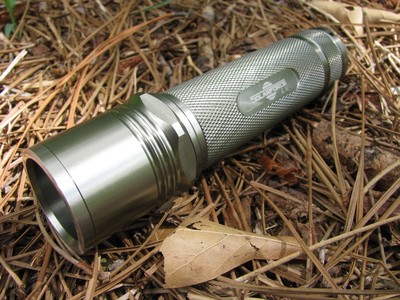
Solarforce L2i

Today Grant and Mom and got flashlights. These are not just any flashlights, but take a lot of great features from a number of different sources. The flashlight is a Solarforce L2i. People absolutely rave about how great a light the Solarforce L2i is, and I will explain more about them later, but one nice thing is that it is a P60 host meaning it takes a standard reflector and bulb combination that is easy to switch out if you want to upgrade the flashlight. And unlike most P60 hosts, this one uses standard AAA batteries. So Mom and Grant also got some of the best AAA rechargeable batteries available: Duracell precharged with white tops that are made in Japan. These batteries are thought to the be the same thing as Eneloop batteries which are the best. What makes them great is that, unlike normal rechargeable batteries, these don’t lose their charge very quickly sitting around waiting to be used. While a typical battery might lose 50% of its charge in a couple of months, these batteries will only lost 15% of their charge in a year. So the flashlight will be ready to go whenever it is needed. But because the flashlight uses 3 batteries and most battery chargers only charge batteries in pairs, they also got a Sony Cycle Energy charger that charges the batteries individually. I have been very impressed with this simple and compact charger that does everything right. There are very few chargers out there that will properly charge batteries by using an acceptable current, cutting off when the battery is full, rejecting bad batteries, while charging batteries individually and without a trickle charge.

solarforce-l2i.jpg

Continue reading “Solarforce L2i”

Battlestar Galactica

For the last couple of years, I have been watching episodes of Battlestar Galactica on my Palm and then iPod. This isn’t the series from the 70’s with Lorne Greene, but the newer version that started in 2004 on the SciFi channel (now just SyFy). But the basic plot was the same in that robot Cyclons wipe out the human race except for a few spaceships full of people, led by a military spaceship called, the Battlestar Galactica, who all go searching for Earth which many think might just be a myth. I finally finished it up this week (I won’t tell you how it ends).

The series is a lot darker than the original. And they did make some significant changes, like some of the hotshot fighter pilots are now women and in addition to classic robotic cylons, there are humanoid versions that look like regular people (except better looking generally). The humans dismissively call the Cylons “toasters” or “skinjobs.” One of the hooks is that even though the Cylons have this great technology to make robots that look exactly like people, they only have a limited number of molds, so a lot of the Cylons look just alike. This is good for the actors because they can get killed and one of their copies can still show up in the show. Speaking of copies, one of the actors from the original series (Richard Hatch, who played Lorne Greene’s son, Apollo) got a minor, but recurring role in the new series.

Anyway, the original series only lasted one season, but the new one got a lot of acclaim for an original cable series and lasted four seasons. It is produced by a guy who worked on several of the Star Trek TV series sequels that started in the 90’s. There are a lot of neat sci-fi twists and even religious storylines (the humans believe in multiple gods, and it turns out the Cyclons believe there is only one God).

Honestly, the series wasn’t always that great. I thought they made some of the characters do kind of stupid things in order to make certain plotlines work. It was still worth watching though, all the way to the end when either the humans are wiped out by the Cylons, find Earth, or none of the above. But it certainly had a lot of neat ideas and concepts in it. And the cast was large enough, not even counting the duplicates, that there was always a lot going on. And the nice thing is it didn’t overstay its welcome like some shows (Lost).

Transcontinental Railroad

I just finished reading Nothing Like It in the World, a book about the building of the transcontinental railroad in the 1860’s. There were two companies involved, the Central Pacific coming from California (CP) and the Union Pacific coming from Omaha (UP) (there was no railroad bridge across the Missouri River in Omaha until after the railroad was finished).

It took a long time to get through the book even though it isn’t that long. It just isn’t that exciting, even for an engineer. But there are a few highlights. Both companies were trying to go as fast as possible and quality didn’t matter to them that much. One reason was it was very expensive to move materials, because there wasn’t a railroad yet. The company in California got its rails, spikes, and railroad cars from the eastern part of the US via ship going around South America (there wasn’t a Panama Canal until much later, though there was a very short transcontinental railroad across the isthmus, built in 1855). So most of the bridges were built out of wood, knowing they would need to be replaced with something more substantial later.

The UP coming from Omaha had a much easier job, able to build across the Great Plains. They were able to achieve a record by laying 2 miles of tracks in one day. A rail car would be pushed to the front of the line with rails and ties, which would be unloaded and laid out in front of the car. But soon the car was empty and in the way of the next car behind it. Since there was only one track they just pushed the car over on its side so the next car could be pushed forward. Once the train was past, they would push the overturned cars back over and onto the track and bring them back empty. Eventually they were able to get 4 miles in one day.

Meanwhile the CP was immediately stuck with getting over mountains in California and had a hard time getting labor, partly because gold had just been discovered in California and everybody left to go try to get rich. They wound up hiring Chinese and then bringing more and more Chinese over once they realized how hard the Chinese would work without grumbling, getting drunk, or killing each other (like the Irish).

Once the CP got into Nevada and Utah, they hit some flat land and could really make a lot of progress. Soon they broke the UP’s record by laying six miles of track in a day. Not much later, the UP got the record back with 8 miles in a day. That record stood for a long time but the UP was soon bogged down working their way up Promontory Summit, just a few miles from where the two lines would meet. Meanwhile the CP was still on flat land as they worked their way East. Knowing the the UP only had 6 miles to go, the CP, with 16 miles to go, made their move and was able to knock out 10 miles in one day, laying 6 miles of track before lunch break. There were 8 big Irish guys that would put the rails in place. They were only supposed to work until lunch and then be relieved, but they wanted to keep going, so those 8 guys carried all 10 miles of rail that day. Really 20 miles of rail since there are two rails on the track. The UP, with only 8 miles to go, had no chance of breaking the record. In fact, the book says the record has never been broken. A few days after that, 101 years before Grant’s birthday, they drove the golden spike. They took the golden spike back out immediately because it really was made of gold and they knew some of the now unemployed workers would take it. In fact, people carved off pieces of the last railroad tie to keep as a souvenir. So many people did it that six railroad ties wound up missing.

Emergency Radio

For some reason I was thinking about weather emergencies, so I started looking for a battery-powered weather radio. In Thailand I had a shortwave radio that could get broadcasts of Voice of America and BBC which was pretty neat and I thought I might want a shortwave radio. But those get kind of expensive and I just don’t see me using it that much since everything on TV and radio in the US is already in English. I found a couple of radios out there that use hand cranks that you can use for a minute or so to charge the internal battery and then get 15-30 minutes of radio play. What I would really prefer is a radio that uses regular AA (or AAA) NiMH batteries that could be charged by the crank. That’s because the little NiMH battery pack can wear out or stop holding a charge, which is pretty likely since it’s being drained down pretty far, and then you would have to get a new one for who knows how much.

For weather, there are 7 different weather station frequencies used by NOAA and the National Weather Service. The frequencies are in VHF instead of AM or FM where it would have been really easy. There used to be real people broadcasting the weather, but now it is all automated robot voices, which isn’t too bad because it seems to be more current.

One feature they have now is radios that come on by themselves when there is a severe weather alert. They also have Specific Area Message Encoding (SAME). This lets you enter the county where you live so that the radio comes on only for weather emergencies that affect your county. You can also program the type of alert you want to hear about, for instance severe thunderstorms, tornado watches, tornado warning, etc. Live on high ground? Then you can cancel tsunami alerts.

Continue reading “Emergency Radio”